
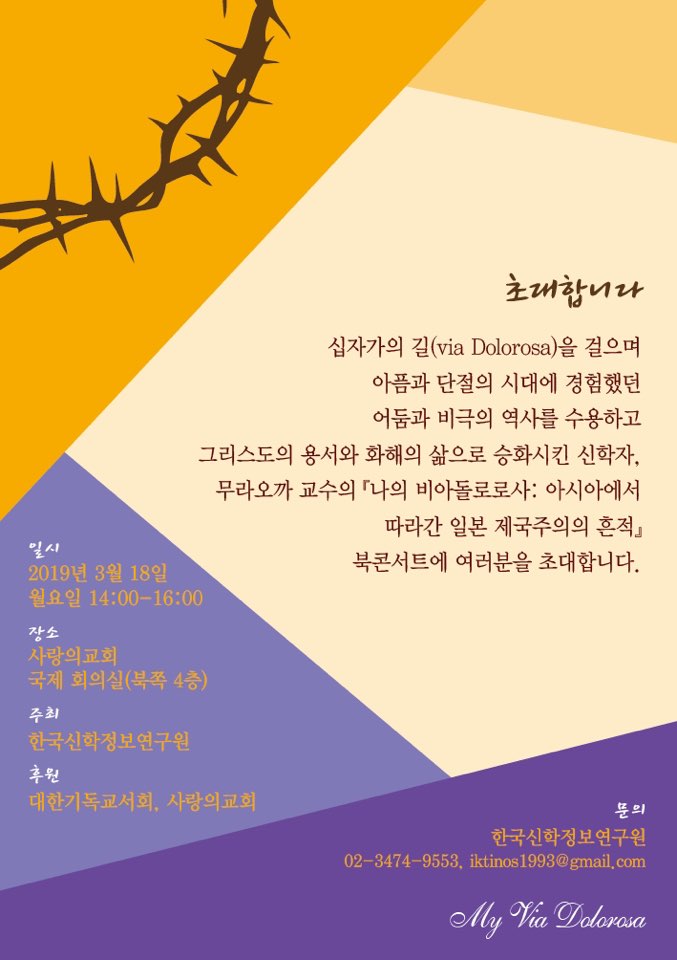
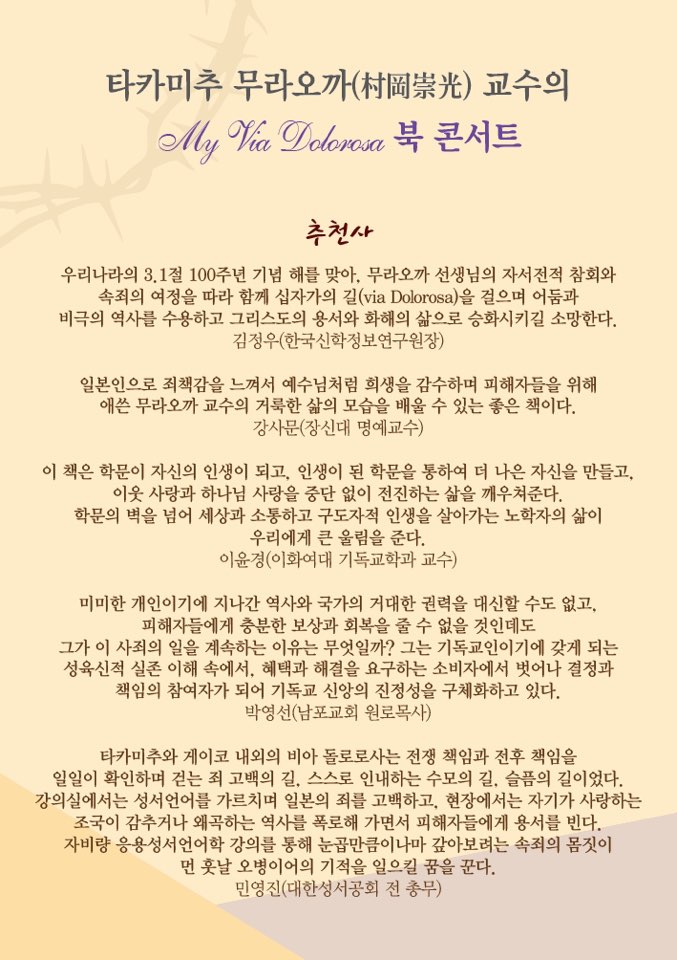
[ 북콘서트 ] 타카미추 무라오까 교수의 나의 비아 돌로로사 북콘서트 - 유선명 교수 서평
페이지 정보

작성일Date 19-03-14 00:00
본문
우리도 누군가에게 가해자였고 수탈자였다
가해 국가 일본 출신의 참회하는 일본이 학자가 우리가 잊고, 감추고 있는 진실을 일깨운다.
유선명
타카미츠 무라오카 교수는 고전 언어 및 문헌학의 대가이다. 이 분야 연구자들에게 그는 “학자들의 학자”이다. 도쿄 대학과 이스라엘 히브리 대학에서 수학하고 영국 맨체스터 대학, 호주 멜버른 대학, 네덜란드 라이든 대학 등지에서 탁월한 가르침과 방대한 연구를 수행한 이노학자(1938년 생)가 일생의 연구서들과는 결이 다른 역저를 내놓았다.
이번 한국어 역본으로 선보이는 「나의 비아 돌로로사」(겨자나무)는 영어 원제- My Via Dolorosa: Along the Trails of the Japanese Imperialism in Asia - 에 생생히 드러나듯 20세기 제국주의 일본의 아시아 침략 및 수탈의 역사에 대한 냉철한 분석이자, 그 추악한 역사 앞에서 느낀 고통스런 심정을 안고 인도네시아ㆍ미얀마ㆍ한국ㆍ싱가포르ㆍ홍콩ㆍ필리핀ㆍ 중국ㆍ대만ㆍ보르네오ㆍ태국에 이르는 피해국을 돌며 참배와 사죄, 자비량 강의 등 자신이 할 수 있는 방식으로 속죄의 책임을 이행해 가는 노정을 담은 담백한 기록이다.
무라오카는 이미 학문 업적으로 특별한 존경심을 불러일으키는 학자이다. 성서 히브리어 문법의 대작을 비롯해 히브리어 강조어법에 관한 언어학적 연구, 시리아어-아람어 문법, 사해 문서 히브리어, 그리고 칠십인역 연구의 신기원을 이룬 최근의 칠십인역 헬라어 사전에 이르기까지 그의 학술 논문과 저서는 늘 그 분야의 기준을 세우고 신기원을 이루는 업적이었다. 「나의 비아 돌로로사」는 이러한 학술 저서들과는 전혀 다르면서도 여전히 무라오카다운 책이다. 저자의 학문 영역과 먼 내용을 다루었지만 그의 학문 정신은 고스란히 드러나 있기 때문이다. 연구서를 자처하지 않는 수상집 형태이지만 저자의 서술은 치밀하고 분석은 예리하며 성찰은 울림이 깊다.
처음 책장을 넘기며 눈에 띈 대목이 “콰이강의 다리” 이야기였다. 콰이강이라는 지명은 어려서 명화극장인가 하는 프로에서 보았던 영화의 제목으로, 액션과 비극적 영웅 서사, 그리고 적이지만 서로에게 존경심을 품는 두 장교의 인간미 정도의 기억으로만 내게 남아있었다. 무라오카는 이 글에서 태평양 전쟁 말기 인도네시아와 버마 간의 군수 물자 수송을 위해 무려 420킬로미터에 달하는 철도와 교량 건설에 불법적으로 동원된 포로들과 민간인들을 보게 해준다. 전쟁포로 6만 명과 민간인 20만 명이 동원된 이 공사에서 영양실조와 중노동, 전염병, 추락, 폭발물 사고 등으로 10만 명 이상이 사망한 것으로 알려졌지만, 그들 중 상당수는 시신도 수습되지 않고 명부도 위령비도 보상금도 사과문도 없이 허공에 스러지고 말았다. “일본 정부는 아직도 그들에게 합당한 사과나 보상을 제공한 바 없다.” 건조하다 못해 무정하게 들
리는 몇 문장이 일본의 가해 행위의 규모와 참혹함을 오히려 더 깊이 각인시켜준다. 그가 제시한 팩트는 위키피디어에서도 찾을 수 있는 것이지만, 무라오카의 글에는 단순히 사실의 제시로는 성취할 수 없는, 그 비극의 역사에 자신을 이입하고 괴로워한 자만이 전할 수 있는 호소력이 있다. 이러한 독서 경험은 마지막 장을 마칠 때까지 여러 번 반복되었다.
무라오카는 피해 국가 국민들이 일본의 악행과 그들의 선대가 겪은 끔찍한 일에 대해 무지하거나 무감각하다는 사실에 경악한다. 일본 식민 체제가 자신들에게 유익을 주었다고 애써 강변하거나, 그 시절이 좋았다고 그리워하는 그들을 마주보며 그는 반복해서 말한다: 당신들이
겪은 역사를 바로 알아야 한다. 내 조국 일본이 저지른 죄를 알고 기억하고, 그러고 나서 용서해야 한다.
피해자가 잊은, 혹은 잊으려 하거나 심지어 듣고 싶어 하지 않는 과거를 가해자가 되살려 스스로의 죄악을 공론화하고 공개적으로 사과한 기록들은 마치 소설을 읽는 듯하다. 저자는 크든 작든 이미 저질러진 악행은 손쉽게 용서하고 편하게 망각할 수 없다며 참된 은혜의 본질에 대한 재고를 촉구한다.
우리는 너무 자주 “잊고 용서하라”고 조언한다. 그것은 죄악으로 인한 고통과 슬픔에 대한 손쉬운 처방전이 될 수 없는, 값싼 은혜에 기초한 유사 복음일 뿐이다. 진정 은혜를 깨달은 자는 죄악이 가한 고통과 상처를 가벼이 여길 수 없다. 죄를 용서하고 상처를 싸맬 진정한 주체는 피해자도 가해자도 아니다. 오직 하나님만이 참된 용서와 치유를 가능케 하시기에, 무라오카는 자신이 가해자이든 피해자이든 하나님의 자비하심을 기대하되 저질러진 죄악을 기억하라, 그리고 사죄하고 용서하라고 조언한다.
무라오카의 충고는 허언이 아니다. 일본인의 의식을 강력히 지배하는 하나가 원폭 피해의식인데, 히로시마 피폭의 고통을 잊지 않고 “더 이상 히로시마가 없기를” 외치면서도, 자신들이 저지른 난징 유린을 기억하며 “더 이상 난징이 없기를” 다짐하지 않는 자기모순을 히로시마 태생의 무라오카는 통렬히 지적한다(112쪽).
무라오카의 이 책을 읽고 평하는 나는 독립 유공자의 자손이다. 일제 강점기에 겪은 우리 선조들의 고초는 겨레의 아픔일 뿐 아니라 가족사의 아픔이기도 하다. 가해자 집단으로서의 “일본”에게 갖는 나의 미움이 무라오카 개인을 향할 이유도 없고 그가 나를 특정해 사과할 이유도 없을 터인데, 무라오카의 글을 읽으며 놀랍게도 일본인에게 개인적 사죄를 받는 느낌이 든 것은 지나친 감정이입이었을까? 이 책 곳곳에 거듭 등장하는 여러 아시아인의 증언을 보면 그렇지 않다. 일본인이 대만인에게 끼친 끔찍한 악행을 알게 되고 일본인을 혐오하게 되었던 제임스란 이는 무라오카 교수 내외를 만나보고서 일본인에 대한 생각이 바뀌었다(144쪽). 사죄의 행동으로 그가 수행하는 무료 강좌에서 배운 학생들은 그에게서 히브리어나 칠십인경의 전문적 지식 뿐 아니라 “구원받은 자가 어떻게 살아야 하는가를” 배웠다고 말한다(148-149쪽).
한 사람이 곧 한 나라이다. 한국을 바라보는 세계인 앞에서 내가 곧 한국이고, 성도를 바라보는 세상 사람들 앞에서는 내가 곧 예수요 기독교요 천국인 셈이다. 일본은, 일본 기독교는 무라오카라는 좋은 대변인을 두었다. 이 책은 우리에게 질문한다: “한국 기독교는” “한국 교회는”이라고 말하는 대신, “한국인으로서” “한국인 그리스도인으로서” 나는 어떤 증인인가?
물론 우리는 일본의 침략과 수탈에 유린당한 비극의 역사 앞에 피해자의 입장에서 과거를 기억하고 가르쳐야 하며, 일본의 사과와 참회를 받을 권리가 있고 요구할 정당성이 있다. 그럼에도 우리 또한 누군가에게 가해자였고 수탈자였음을 기억해야 한다.
우리 정부가 지속한 길고 가혹한 경제적 차별행위로 고통 받은 화교들에게, 우리의 국가적 이익을 위해 뛰어들었으면서도 불필요하고 잔인한 행위로 피해를 입힌 베트남인들에게, 절대적 약자의 위치에서 노동력 착취와 인권유린을 당한 외국인 노동자들에게, 욕망 혹은 애정의 책임을 저버린 한국인 생부를 원망하는 다수의 코피노들에게…. 국가가 아닌 신앙과 양심을 지닌 성도 개개인으로서의 할 바를 생각하라고 이 책은 촉구한다.
미국 미주리 주 소도시의 한인 교회에서 집회를 인도한 적 있다. 무슨 이유에서였던지 설교 중에 우리 한국이 늘 외침을 당하고 중국의 지배와 일본의 통치를 당한 피해자라고들 하지만 우리도 가해자였다, 화교들에게 행한 차별 행위에 대해 나 자신이 대표는 아니지만 한 사람의 한국인으로서 부끄럽고 죄송한 마음을 갖는다는 말을 하게 되었다. 예배를 마친 후 눈빛이 형형한 노인장께서 나를 찾아 정중하게 절을 했다. 당황한 내게 자신이 화교로 육십 년을 살다 미국에 이민을 온 사람인데, 팔십 평생 한국이 행한 못된 짓에 대해 개인적으로 사죄한 한국인은 당신이 처음이라고, 고맙다고, 마음이 가벼워졌다고 말했다. 그 문제에 별다른 식견도 없는 터에 그날도 무슨 결심하고 한 말도 아니어서 인사를 받기가 몹시 민망했다. 그러나 그분에게는, 그 시간 그날만큼은, 내가 좋은 한국인이었던 것이다. 동일한 내가 다른 장소 다른 시간에는 누군가에게 이웃을 배려하지 않는 무례한 한국인, 규칙을 어기는 “어글리 코리언”으로 비쳤을지라도 말이다.
무라오카의 성찰과 도전은 사죄의 행동에서 멈추지 않고, 국가의 죄악을 뒷받침하고 방조한 일본 기독교의 국가주의 노선에 대한 자성과 회개로 나아간다. 우리 한국 교회가 깊이 고민해야 할 화두가 아닐 수 없다. 신사참배를 놓고 찢긴 우리 교회사의 환부는 아직도 아물지 않았다. 국가권력 집단과 한국 기독교의 밀월 속에 이루어진 거래들이 하나님의 축복과 기적이라는 이름으로 포장되어 교인들 간에 회자되어 온 부끄러운 역사는 또한 어찌할 것인가? 군사독재 시절 수많은 강단을 채웠던 정의 없는 평화와 값싼 은혜의 메시지들에 대해 교회는 어떠한 반성과 회개를 보여주었는가? “진리를 알지니 진리가 너희를 자유케 하리라”(요한복음 8:32) 예수께서 의미한 진리는 추상적 원리가 아닌 진실이요 사실이요 팩트이다. 진실이 우리를 자유롭게 한다. 우리 안에 엉킨 역사의 실타래를 풀고 의와 공평, 은혜와 진리의 미래를 함께 여는 노정에 오르도록 초대해준 이 일본인 형제에게 큰 감사를 표한다. CTK 2019:3
유선명 백석대학교 기독교학부 구약학 교수, 「잠언의 의 연구」(새물결플러스, 2017). 「유 목사
의 성경 이야기」(대서, 2016). Righteousness in the Book of Proverbs(Mohr Siebeck,
2012) 저자.
A response to the Korean translation of My Via Dolorosa: Along the Trails of the Japanese Imperialism in Asia.
Sun Myung Lyu (Baekseok University, Old Testament)
Professor Takamitsu Muraoka, a true master of ancient languages and philology in our time, has taught at many prestigious universities worldwide including Manchester, Melbourne, and Leiden, producing numerous and scintillating academic works along the way. His moving memoir My Via Dolorosa: Along the Trails of the Japanese Imperialism in Asia deserves as much attention as his scholarly works. My Via Dolorosa chronicles Muraoka's journey through Indonesia, Burma, Hong Kong, Philippine, China, Taiwan, and of course Korea. Over the past fifteen years, he tread on his via dolorosa offering his apology, solidarity, and unpaid teaching ministry for the people from the countries inflicted by the imperialist Japan.
My Via Dolorosa is a vintage Muraoka: an unassuming prose filled with sharp analysis and profound reflection. The first thing that caught my attention was the "Bridge over the River Kwai" story, which I remembered as a tragic yet heroic narrative of the honor code and patriotism of the soldiers and officers. Muraoka instead opened my eyes to the unimaginable pain of those 60,000 POW's and 200,000 civilians all illegally pushed for constructing a stunning length of 420km railroad to pipeline supplies between Indonesia and Burma. 100,000 of those are believed to have died of malnutrition, diseases, and explosions. Many of the victims weren't even properly buried. No medal, tombstone, or reparation was given. Not even a simple apology was ever offered by Japanese government. Such sentences, concise to the point of being dry, nevertheless made me grasp the scale and intensity of the atrocious acts. One could assemble from Wikipedia the same facts, but Muraoka speaks in a voice only attainable by those willing to throw themselves into the painful past to shudder, to cringe, and to weep for the souls?of the victims, of the villains, and of their own.
Muraoka is shocked to realize that many people from those inflicted countries are ignorant of or dismissive about the terrible deeds committed to them. Some even insist that the colonial experience was beneficial for their countries. So Muraoka chants: you should face the truth; know the history; know what Japan did to you; remember, and then, and only then, forgive. It's not the victim, even less the offender, who can offer true forgiveness and make stitches over the bleeding wounds. Only God can offer genuine forgiveness and restoration. Muraoka does not speak of this lightly. A native of Hiroshima, he is familiar with the Japanese sentiment of victimization by the atomic bomb. But he directs us to the horror of Nanjing Massacre to realize how self-contradictory to outcry "No more Hiroshima!" without ever shouting "No More Nanjing!"
My grandfather was an activist and financier for the Korean independence movement. The pain and loss inflicted on my ancestors during the Japanese occupation is very personal. Of course there is
no reason for me to direct my hatred to any individual Japanese citizen, nor does any Japanese need to apologize to me. But reading this book made me feel as if the author has offered his personal apology to me. Was I overly sentimental? Perhaps. But many people over the years seem to have felt the same way. A man named James said he changed his mind about Japan after he met Muraoka. Students who took his biblical language courses often witness that they learned not just technical knowledge but "how a saved Christian should live his life."
This book proves that Japanese Christianity has a very good representative in Muraoka, and it made me ask what kind of witnesses we are. We sure will remember Japanese occupation. We do have our right to demand apology from Japan. Nevertheless, we must remember that we too were offenders and villains to someone else. Korean governments have long mistreated the Chinese population living in Korea. We are guilty of many brutal acts against Vietnamese people in the war we participated chiefly for our own benefit. We owe apology to those foreign workers enduring exploitation and human right violations by Korean employers, and to many Kopinos who have grudge against their biological fathers who abandoned them. This book demands us to think what to do for them, not as the abstract "nation," but as individuals who have faith and conscience.
I once spoke for a Korean-American congregation in a small city in Missouri, USA. For reasons that elude me now, I mentioned how Korea has long played victim by Chinese and Japanese imperialism but in fact discriminated and victimized others, especially those "Chinese-Koreans" among us. And I expressed my apology toward them as a Korean myself. After the worship service, an old man with stately white hair came by and offered a solemn vow to me. He explained that he had lived in Korea for sixty years and I was the first Korean who genuinely apologized to him for the dishonorable things done to them. "Thank you so much. Your apology made my heart lighter," he said. I felt more embarrassed than proud as it was an unprepared comment and I was not even that knowledgable about what I talked about. But to that gentleman, on that day and in that hour, I was representing what was good about Korea. Although I am sure at other occasion I could well be seen as a rude Korean, an inconsiderate neighbor, a rule-breaking ugly Korean.
In the spirit of the author who pleads that the Japanese churches to repent and act on, Korean churches should ponder. The ripple caused by Shintoist worship participation among Korean churches left a deep scar that has yet to heal. Many denominations have blessed the previous dictatorial leaders and received favors. Too many messages of peace without justice, and grace without repentance, have been preached in the face of rampant injustice. Have we shown enough proof of reflection, remorse, and repentance? "You shall know the truth, and the truth will set you free." What Jesus means by truth is not some abstract proposition; it is truth as fact, things as they are. That truth will set us free. My deepest thanks to my Japanese brother for inviting us to the journey for the truth and freedom.
- 이전글제 2회 SOBA 독경회 19.05.03
- 다음글제 1회 쏘페르 아카데미아 독경회 안내 14.07.17